
Olive Nwosu In Process
On Nigerian cinema, specificity and rebellious characters

Olive Nwosu is a secret troublemaker. Or at least that’s how she explains her fascination with characters who operate on the margins. “I think my characters are all rebels in some way,” says the filmmaker behind Lady, the Lagos-set neo-noir that made waves at Sundance earlier this year. Olive’s films are populated by people whose interior lives exceed the environments around them. Curious Igbo boys dismissed as mischievous and “ladies” in Lagos swerving through the city with a level of bravado and intimacy usually reserved for Scorsese protagonists and men in A24 films.
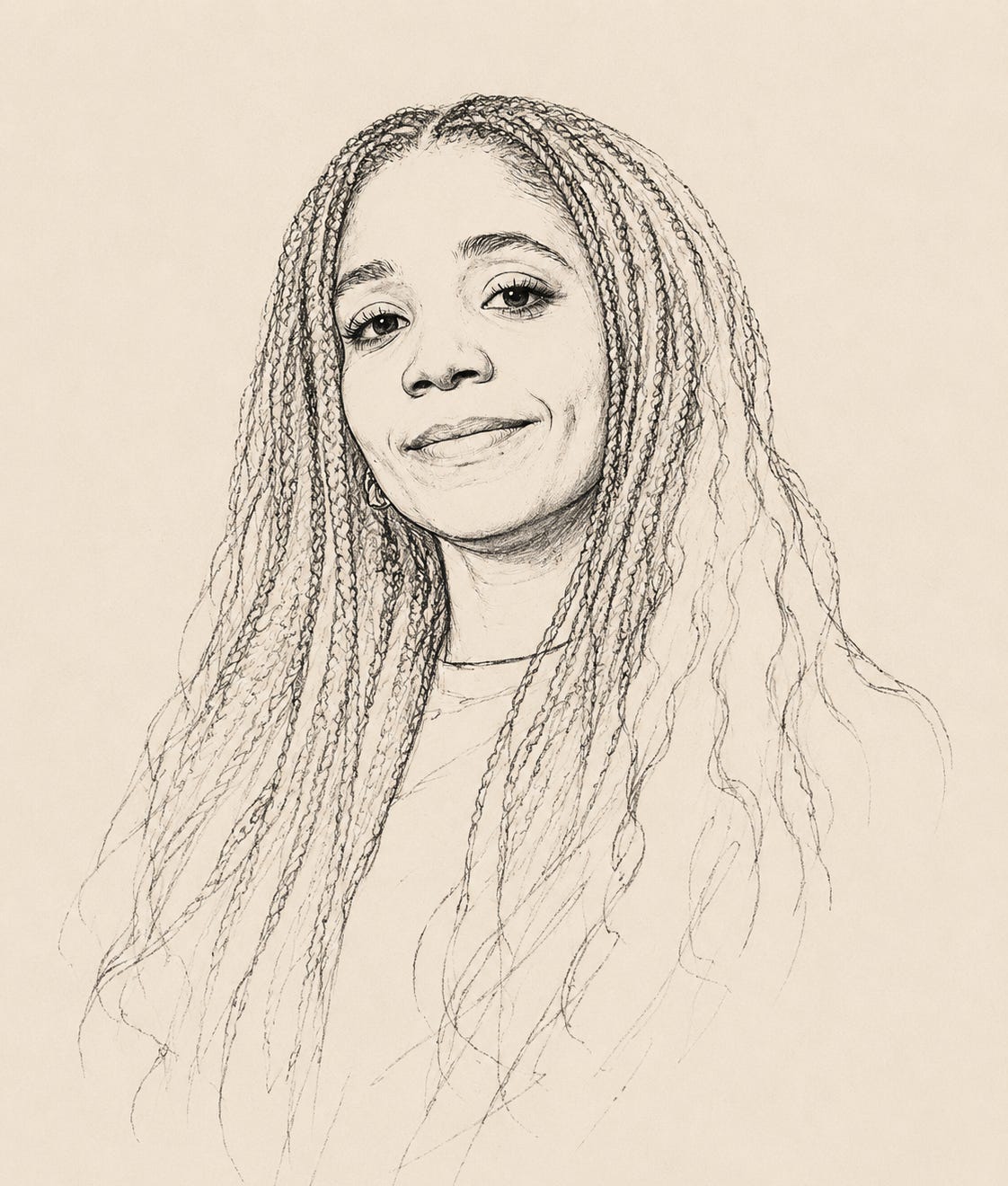
Before Olive became a filmmaker, she was a dreamy child. Growing up in Lagos, it took her a while to find her tribe. “I had a very strong inner life,” she tells me, noting that it wasn’t necessarily something cultivated within the rigid environment of a traditional Nigerian education. Still, Olive continued to dive inward, and that sensibility still lives at the core of her writing process.
Olive’s writing process begins stubbornly insular. For her, storytelling is about excavating what she describes as truths, nuggets that are deep and durable. “I really believe in the timelessness of story,” she tells me. “I think if something is timeless, it’ll resonate.” When starting a new project, she buys a notebook and handwrites for as long as possible, piecing together themes, images and emotional tensions until she can distill the entire weight of a story into a singular idea. Only then does she shift to her laptop. For Lady, that idea centered around what intimacy can look like in Lagos for women trying to survive.
When Olive and I speak, it’s a few days before Lady screens at the African Film Festival in New York following its Sundance debut, another stop in the increasingly global life of a film deeply rooted in Lagos. The timing feels especially interesting now, as African stories travel further than ever while conversations around authenticity and distance grow louder in parallel. Recently, Nigerian Twitter spent days joking about diaspora writers whose work reads Nigerian on the surface but whose distance betrays them in the details. “The sweltering Lagos summer interrupted my lunch of jollof rice and bean cake,” one viral tweet mocked.


Olive understands the tension instinctively. “I do go back. I find that I have to,” she tells me of her trips to Nigeria. “The rhythms are different every time, and it shows up in the writing if you’re not careful.” Though she now moves between London, New York and Lagos, she still returns home while writing, chasing what she describes as an immediacy “you can’t fake.” “I carry Lagos energy in my body,” she says. “But I do think it can become a bit abstracted when you’re not home.”
In writing Lady, Olive spent nine weeks with sex workers across Makoko, Surulere and Allen, showing up day and night, building the kind of closeness that permits people to stop performing for you. For Olive, who recalls her early years in Lagos with protective parents, the process also felt tied to a curiosity she’d carried since childhood. “What is the thing on the street that is so scary?” she says, reflecting on being driven through the city as a child, always aware of some larger Lagos existing just outside the car window.
Some nights were frightening and involved seeing the worst of men, including moments where she herself was mistaken for a sex worker and solicited. Other nights were punctuated by laughter and long car rides full of the dirtiest jokes she’d ever heard. “You don’t hear that version of what an ashawo is,” she says. The women she met were funny, emotionally bruised, self-medicating, protective of one another and most of all, startlingly free. “I don’t think people had really been like, ‘What’s your story?’
“You don’t hear that version of what an ashawo is,” she says. The women she met were funny, emotionally bruised, self-medicating, protective of one another and most of all, startlingly free. “I don’t think people had really been like, ‘What’s your story?’” she says.
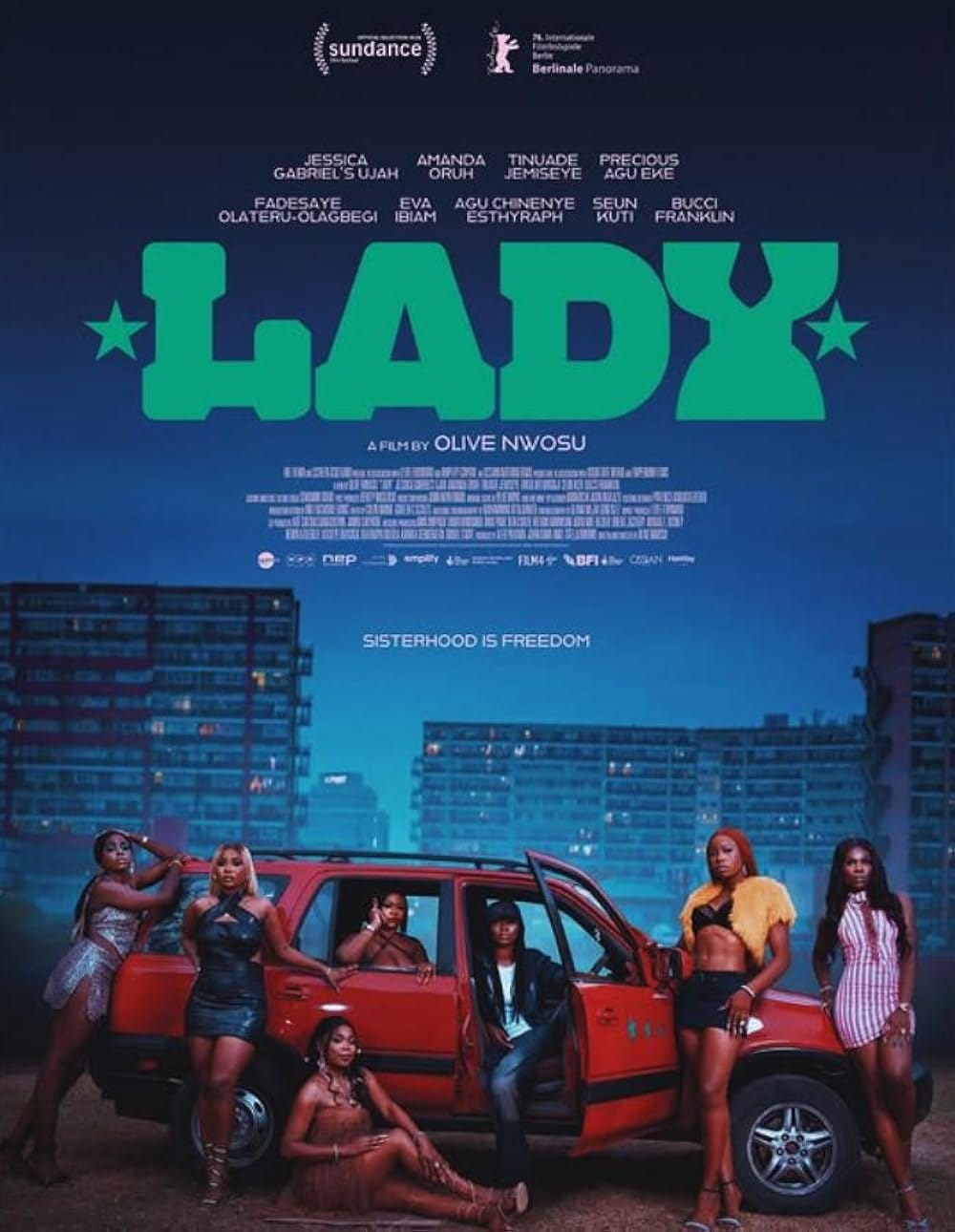
Olive’s characters rarely feel engineered to explain Nigeria to outsiders. They are too specific for that, consumed by their own desires, contradictions and survival.“I write from inside the world,” she says. “Of course there are specificities to place, but emotionality is universal.” That understanding of closeness to subject matter allows Olive to write characters who feel distinctly Nigerian without collapsing into the archetypes that often shape how African stories are consumed globally and locally. “I feel you have to really have a closeness to something to find these shades and sensitivities,” she tells me.
On the evening of Lady’s screening at the New York African Film Festival, I settled into a packed theater in the Brooklyn Academy of Music on a rainy Saturday, watching the audience as closely as the film. The room, which was not overtaken by Nigerians, followed along easily, erupting into laughter and gasping at all the right points. More interesting, though, were the moments they found emotionally significant that I, as a Lagosian, had overlooked. Afterward, Olive stayed for a Q&A dressed in a masquerade-inspired shift dress by Ẹ̀kìkéré, her answers as earnest and deliberate as her work.
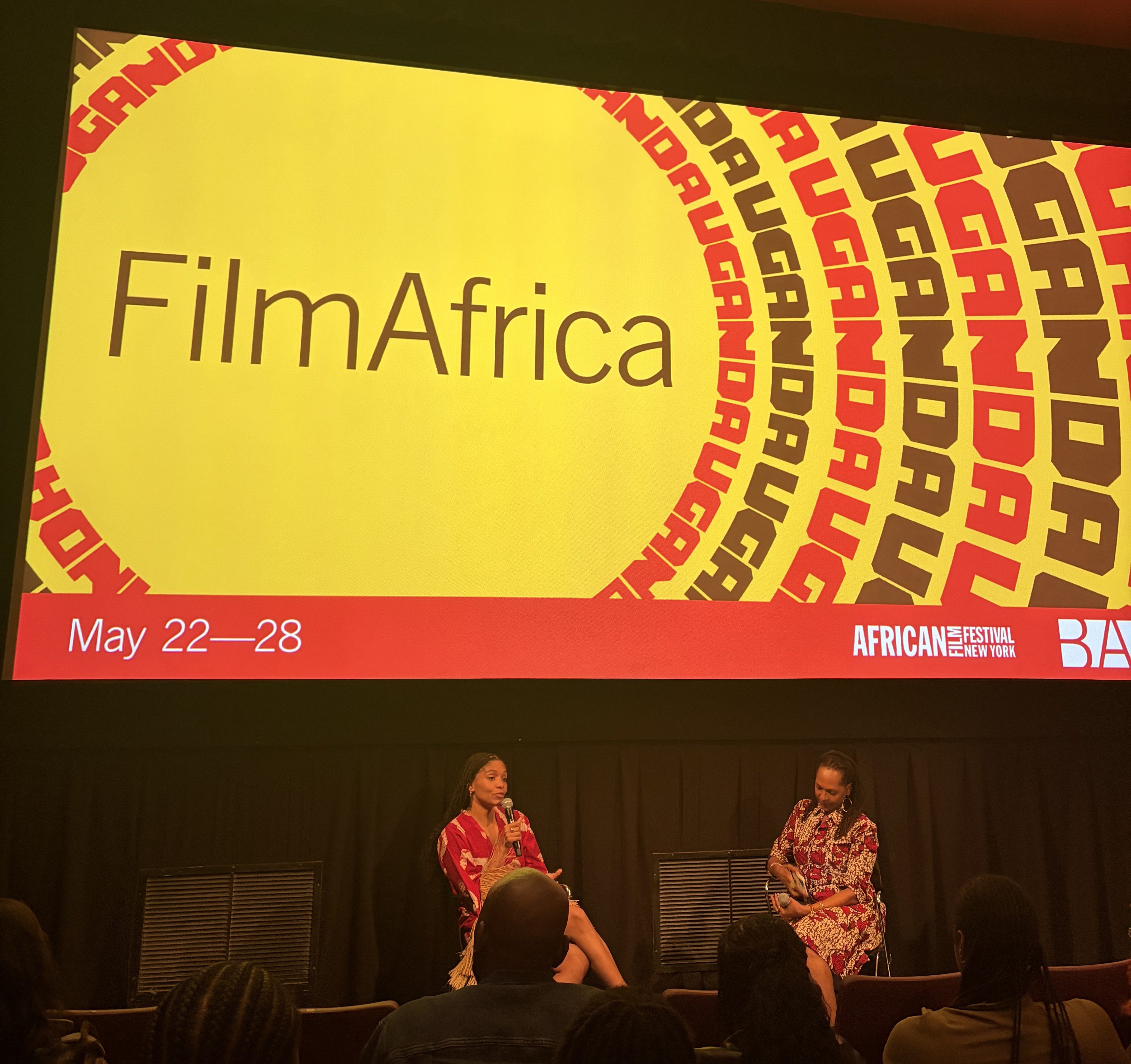
Olive’s references stretch from films like La Haine and Do the Right Thing that treat city life with tenderness and urgency, to Russian cinema. For the Columbia film school grad, the distinction lies in the difference between ethnography and intimate storytelling. The balancing act, she explains, is figuring out how much to explain without pulling audiences out of the emotional reality of the story itself. Scorsese’s ability to bring the interior worlds of Italian-American men to life is also an inspiration for Olive, who seems equally interested in granting Nigerian women that same specificity and cinematic scale.
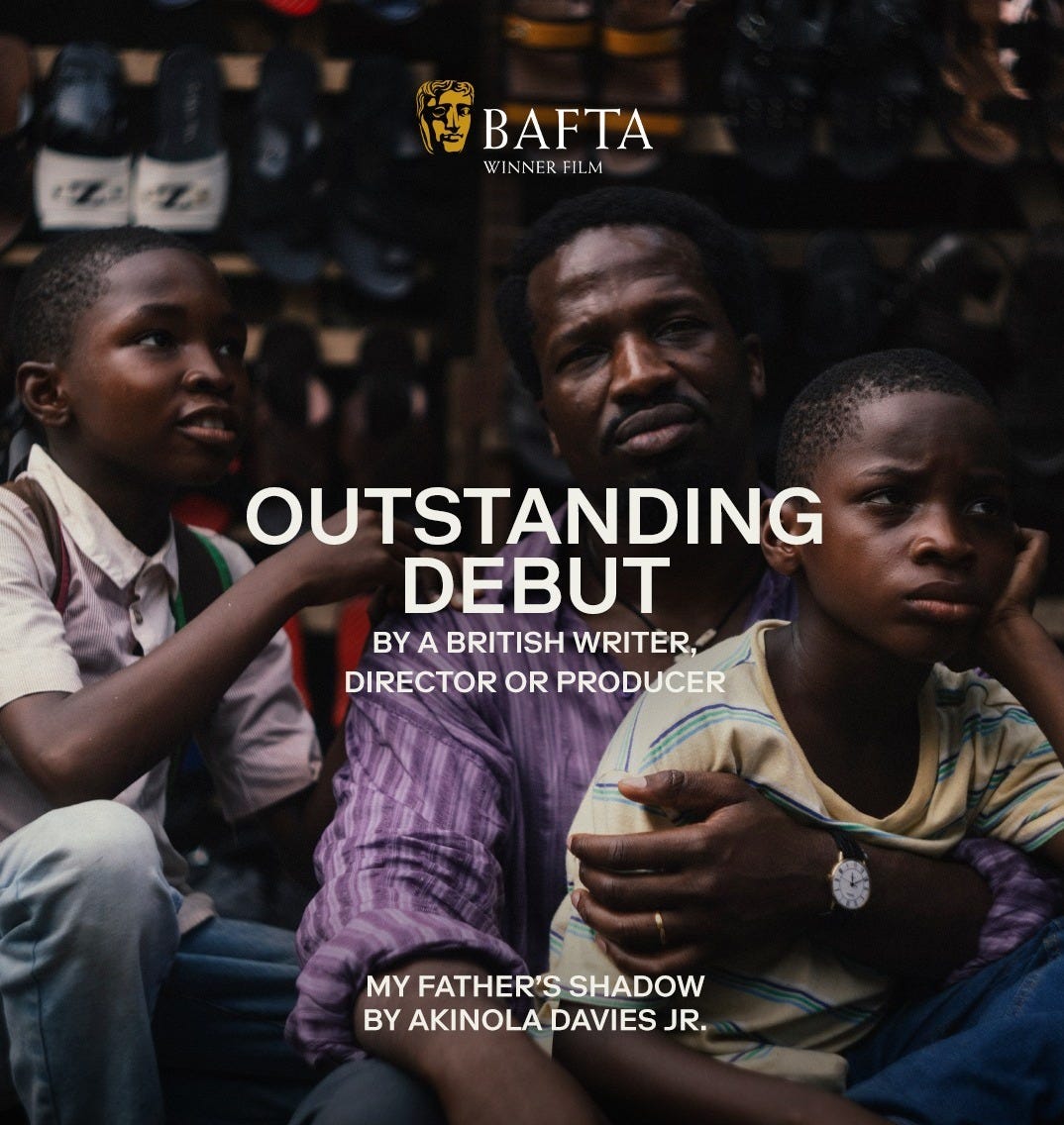
That philosophy feels increasingly present across a new crop of filmmakers receiving global recognition for telling Nigerian stories with specificity and range. This year alone the Davies brothers’ My Father’s Shadow won a BAFTA, while the Esiri brothers’ Clarissa received rave reviews following its Cannes premiere. Olive speaks about this moment with genuine excitement. “It feels kind of like finally our stories are being told by us to a global audience,” she says. Though the films themselves differ stylistically, she notices recurring preoccupations across many of the works emerging from her generation. “We’re circling similar ideas in different modes,” she says, pointing to shared interests in political transition, class tensions and people caught in transformational stages of their lives.
The success of these critically acclaimed films has also opened up conversations around who Nigerian cinema is actually for. Following My Father’s Shadow’s AMVCA sweep, many Nigerians admitted they had never even heard of the film despite its international acclaim and limited local cinema run.
“For a long time it felt like there were two modes, and we’re still moving away from it,” Olive explains. “There was the Nollywood mode and then there was the kind of European arthouse mode.”
Olive hopes the current moment pushes beyond that binary. Filmmakers are beginning to pull from multiple cinematic traditions at once without feeling forced to choose between “Nollywood” and “arthouse.” The challenge now is whether audiences, institutions and distribution systems will create enough room for that experimentation to grow.
Nonetheless, Olive is clear-eyed about the structural realities impacting who gets access to these films in the first place. Distribution remains limited, film rights complicate circulation and conversations around alternative forms of storytelling often carry an elitist slant. “You also have to do education at home to different cinematic languages,” she says. “And I don’t know that many people are doing that.”
The answer seems to lie in building stronger cultural institutions capable of supporting experimentation from the ground up. Through funding, but also through archiving, screenings, film education and a deeper engagement with our own cinematic history.
When I mention recently discovering the work of filmmakers like Ola Balogun and learning about an entire era of Nigerian cinema from the 1960s that seems to have vanished, Olive immediately lights up. “ I think knowing our history is crucial, actually, to understanding why things are the way they are,” she says, pointing to the generation of filmmakers that transformed Yoruba theatre into cinema decades ago.
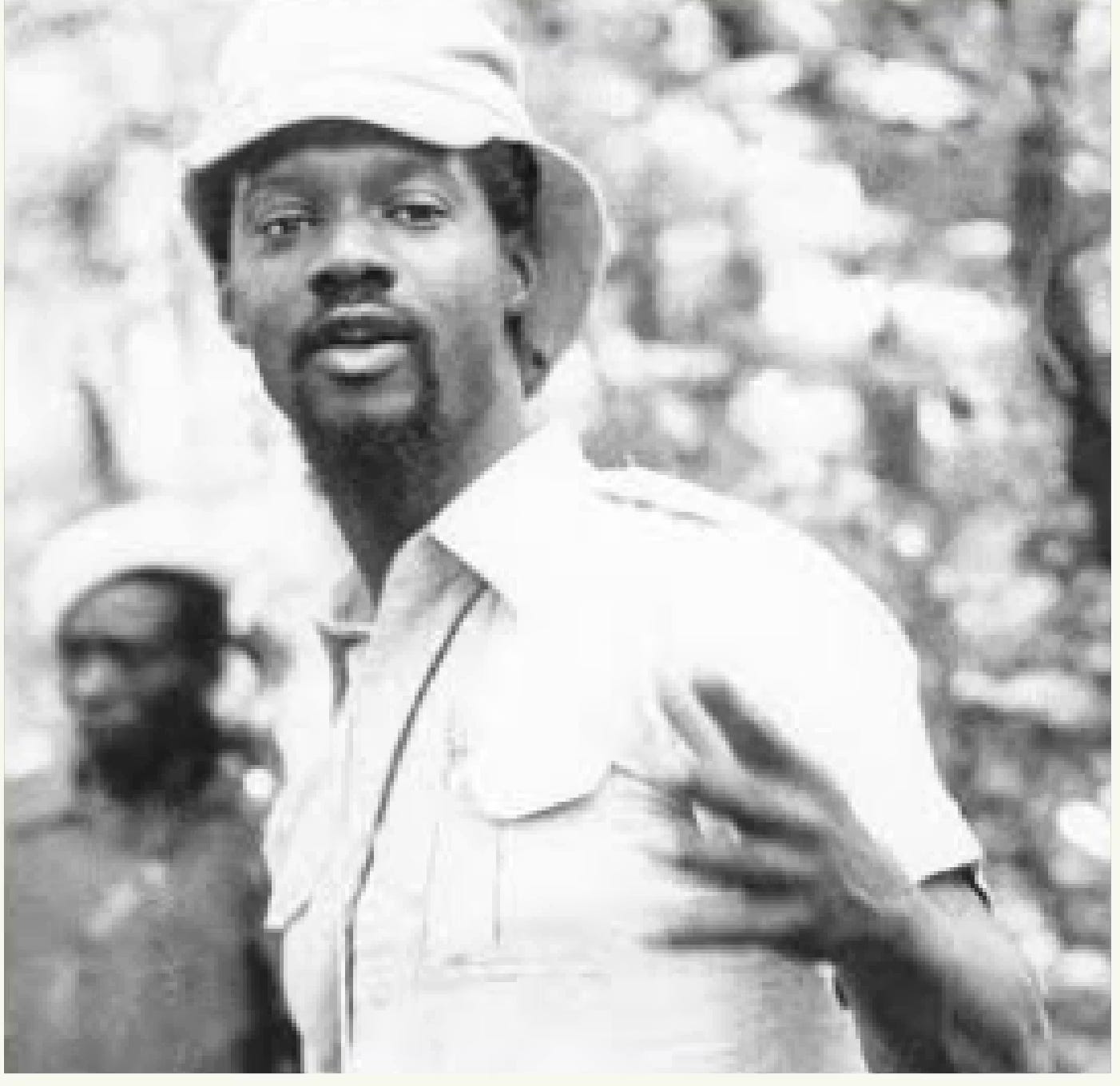
Our relationship with former colonial powers also helps explain the uneven development of filmmaking across the continent. Olive notes that Francophone African countries historically received institutional support from France to develop filmmaking ecosystems in ways many British ex-colonial countries did not. In Nigeria, by contrast, radio remained dominant for decades. “Film is an expensive medium,” she says simply.
Despite how deeply rooted storytelling has always been within Nigerian culture, filmmaking can still feel foreign to us because so much of our cinematic history is no longer accessible.
As a child, Olive could imagine herself becoming a novelist. Not a filmmaker. “The first love is literature,” she tells me. African writers already occupied a visible place within the culture in a way filmmakers did not. She spent her early years buried in books and her thoughts, understanding storytelling long before she could identify film as a medium available to her. “I could imagine being a writer, we had African authors in our zeitgeist,” she says. “But I couldn’t imagine being a filmmaker.”
Olive now places her camera on Nigerian characters and stories rarely granted the dignity of interiority. Women who live on the margins, pushing against the boundaries of respectability and desire.
Olive spent most of her life tucking away her inner troublemaker. Now, her characters make the trouble for her.